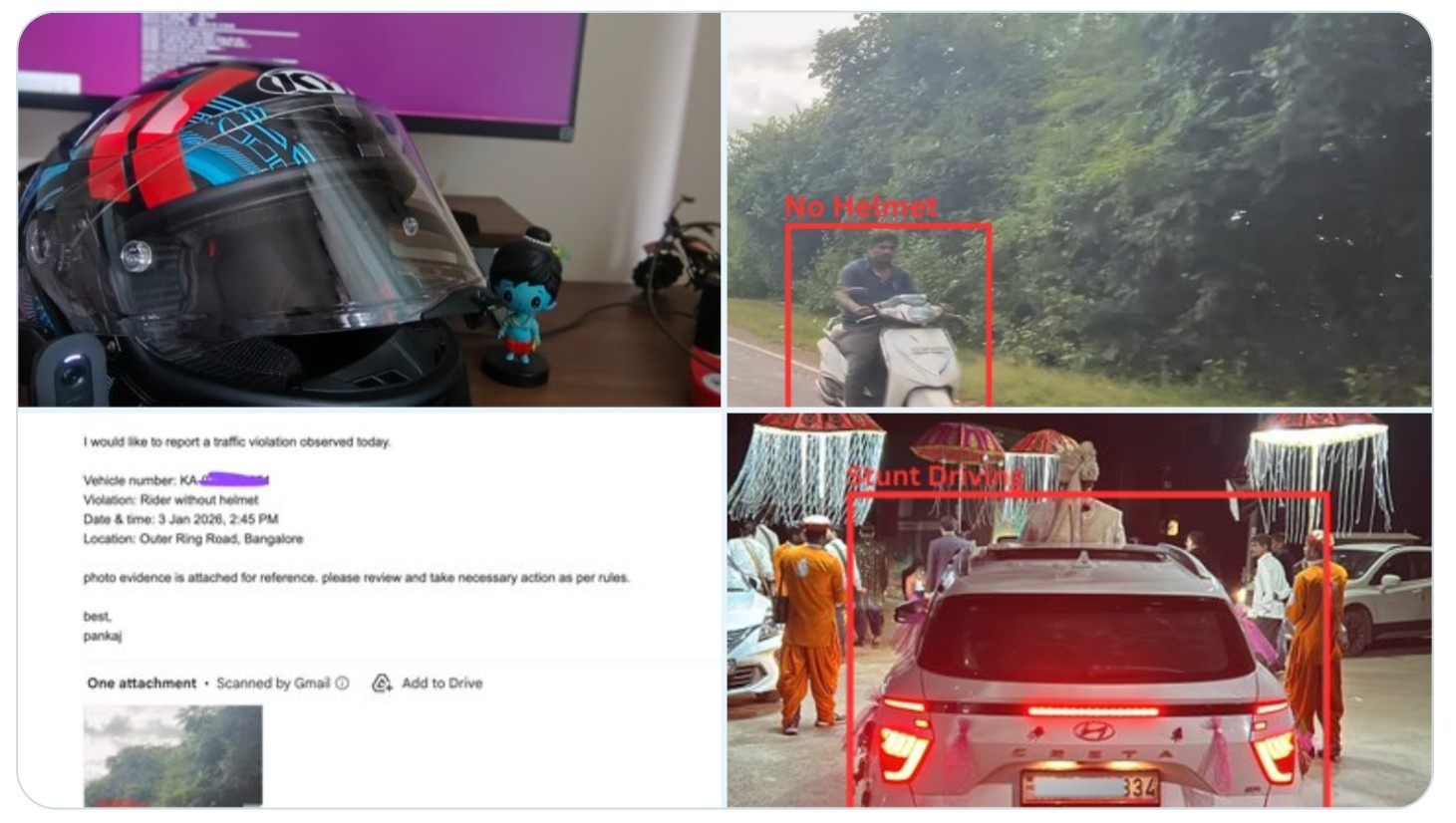
Pankaj Tanwar’s device spots rule-breakers on wheels and emails proof to police, sparking interest in smarter road enforcement
Pankaj Tanwar, a software engineer in Bengaluru, has fitted a standard helmet with an AI helmet camera. This setup detects traffic violations as they happen. It captures video clips and number plates. Then, it emails the evidence straight to the traffic police.
This development matters today because Bengaluru logs over 1,000 road accidents yearly. Violations like helmetless riding and triple seating contribute heavily. Tanwar’s AI helmet provides a low-cost way for citizens to aid enforcement. Police resources are stretched thin in peak hours.
Project Background
Tanwar started this project during his daily commute on MG Road. He noticed frequent breaches but saw no quick fixes. So, he integrated open-source AI models into the AI helmet. The goal was simple enforcement support. He shared a demo video online last week. It showed the AI helmet spotting a rider without a helmet. Views hit thousands within hours.
Local developers often tinker with tech for urban woes. Yet, Tanwar’s approach stands out for its direct police link. He used affordable parts like a Raspberry Pi and a wide-angle lens. Total cost stayed under Rs 5,000.
Also Read: Waymo Tests Gemini AI as In-Car Assistant for Robotaxis
Core Features
The AI helmet runs computer vision algorithms. These scan for common violations in real time. For instance, it flags riders skipping helmets or driving on the wrong side. It also catches triple riding on bikes. Once detected, optical character recognition reads vehicle plates. The system compiles a short clip with timestamps.
An automated script sends this via email to Bengaluru Traffic Police. Processing takes seconds. Tanwar tested it over 50 rides. Accuracy reached 90 per cent in daylight. Night performance needs tweaks, he notes. Power comes from a small battery pack. It lasts eight hours per charge.
Timing in Bengaluru’s Traffic Scene
Bengaluru’s roads handle 60 lakh vehicles daily. Violations rose 15 per cent last year, per police data. This comes amid stalled smart city projects. Tanwar launched his AI helmet demo in early January 2026. It aligns with the city’s push for AI in policing. Last month, authorities piloted drone surveillance.
Moreover, public frustration builds after a fatal accident cluster in December. Tanwar’s timing taps into calls for community tools. Police commissioner Seemanth Kumar Singh messaged him directly. He called the idea innovative and asked for details.
Enforcement Shifts
Traditional patrols cover limited spots in Bengaluru. The AI helmet lets any rider contribute data. Police can verify clips remotely. This cuts response time from minutes to seconds. Early trials suggest it eases the overload on 1,000 officers.
Furthermore, it builds a violation database over time. Patterns emerge, like peak-hour hotspots. Authorities gain insights for targeted checks. Tanwar plans open-sourcing the code. This invites tweaks for local needs.
Systemic Reach
Beyond Bengaluru, similar citizen tech appears in Delhi and Mumbai. Global cities like Singapore test wearable enforcers. The AI helmet fits into shared mobility trends. It empowers users in the gig economy rides. Platforms like Uber could integrate it for safer fleets.
In addition, it highlights infrastructure gaps. Roads lack enough cameras. Yet, distributed devices like this AI helmet fill voids. International standards from ISO on AI ethics guide such tools. Data privacy stays key. Tanwar anonymises personal details in clips.
Beyond the Spec Sheet
Riders feel safer knowing violations trigger quick alerts. This cuts reckless behaviour on shared lanes. Access to verified roads improves for families on two-wheelers. Costs drop as fewer accidents mean lower repair bills. Reliability grows with consistent evidence. Daily commuters shift habits, like always wearing helmets, to avoid flags. Fleet operators track compliance better, boosting on-time deliveries.