
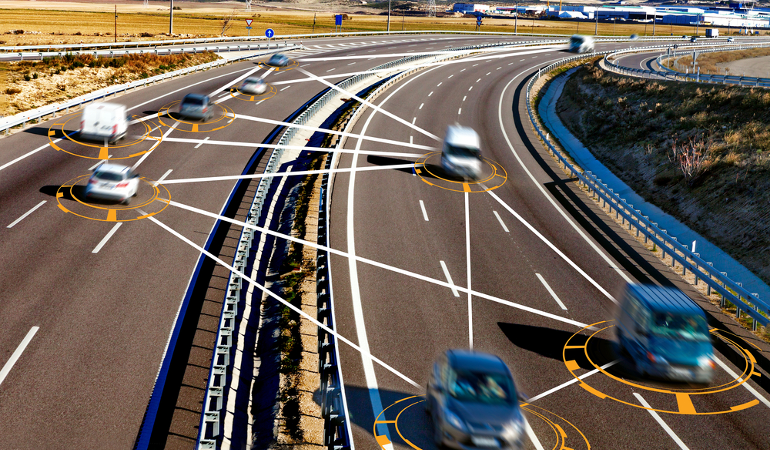
Union Ministry will mandate vehicle-to-vehicle tech in new cars for real-time alerts, targeting a drop in crashes amid rising urban traffic
The Indian government has announced plans to introduce V2V communication nationwide by the end of 2026. This technology will equip new vehicles with devices for direct data exchange. Officials aim to notify the mandate soon. Then, a phased rollout will follow.
Road accidents claim over 1.5 lakh lives yearly in India. Therefore, V2V communication matters now. It addresses gaps in visibility and reaction time. Moreover, urban congestion worsens risks. So, timely alerts can save lives and ease traffic flow.
Core Mechanics of V2V Communication
V2V communication relies on short-range wireless signals. Each vehicle carries a device, such as a SIM card. This setup enables real-time sharing of speed, direction, and braking data. For instance, a braking truck ahead sends instant warnings to trailing cars.
The system offers 360-degree coverage. Thus, it detects hazards from all sides, including blind spots. Additionally, it works without mobile networks. Hence, reliability holds even in remote areas. Integration with ADAS further sharpens its edge.
Also Read: India Launches Real-World Trials of Toyota Mirai Hydrogen Car in Groundbreaking Green Move
Infrastructure Shifts for V2V Integration
India’s road network spans 63 lakh km but lacks uniform technical support. Therefore, V2V communication rollout demands updates. New vehicles will lead adoption. Gradually, retrofits may follow for older fleets.
The project costs around Rs 5,000 crore. However, consumers face added charges for devices. On the other hand, highways and cities need signal boosters. So, coordination with states ensures smooth deployment. Global examples from Europe guide this effort.
V2V communication builds on existing signals. For example, it complements traffic cams and GPS. Thus, systems gain layered safety. Moreover, testing phases will refine accuracy before full launch.
Beyond the Spec Sheet
V2V communication smooths highway movement by averting rear-end collisions. Drivers access safer routes in fog-prone zones, cutting delays. Initial device costs are offset by fewer accident repairs and insurance claims. Reliable alerts foster cautious behaviour, as cars signal hazards proactively. Fleets for goods transport gain predictable schedules, reducing downtime from crashes.
V2V communication eases urban access for two-wheelers amid heavy traffic. Families travel with less worry on inter-city drives. Over time, lower crash rates reduce the burden on public funds. Riders adapt their habits, such as maintaining distance, after repeated warnings. Infrastructure upgrades support this shift, as signals link to smart poles.


