
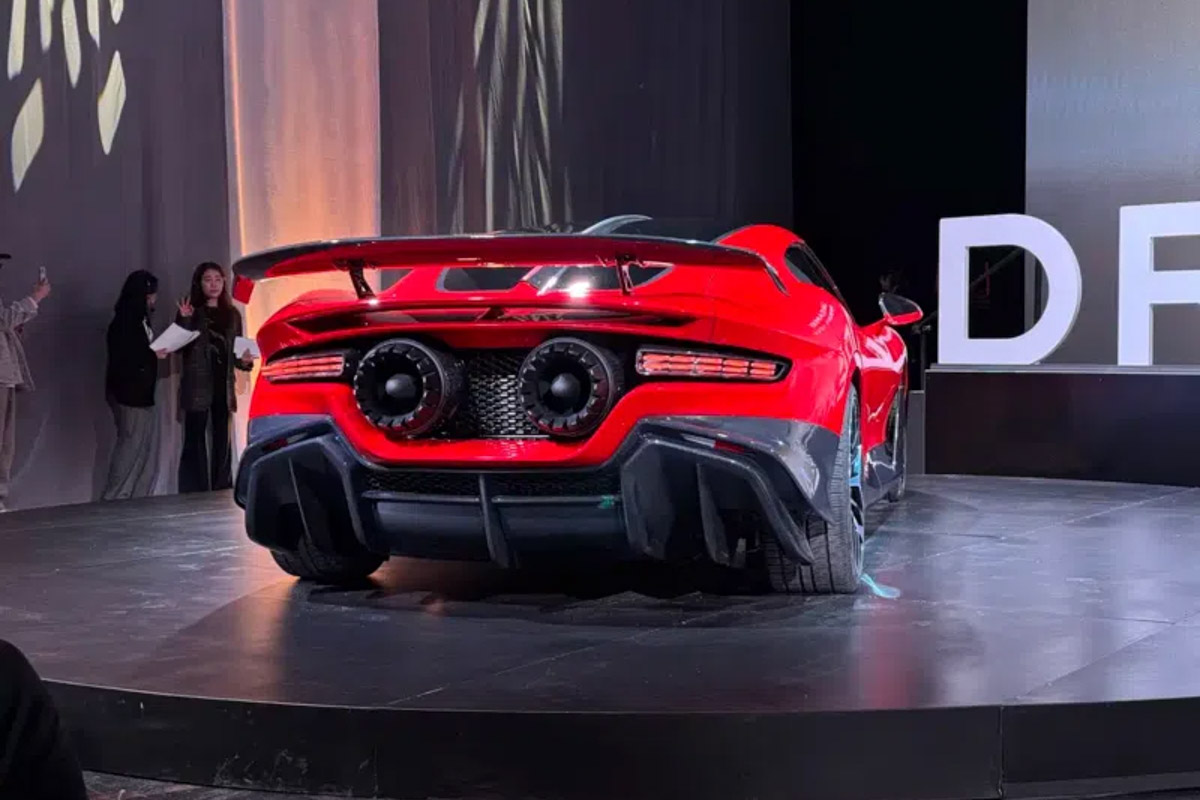
Nebula NEXT 01 Jet Edition claims a 0.9-second 0-100 km/h sprint using dual solid-fuel rocket boosters
Dreame launched the Nebula NEXT 01 Jet Edition in San Francisco. The electric sports car adds a custom-built dual solid-fuel rocket booster system to its base Nebula platform. It claims a 0-100 km/h time of 0.9 seconds with the boosters delivering 100 kN peak thrust and 150-millisecond response.
Rocket Propulsion Enters Production Plans
Dreame, primarily known for its robot vacuums, first unveiled the 1,876-hp Nebula 1 EV supercar at CES. The Jet Edition upgrades it with rear-mounted rockets for extra thrust beyond electric motors. The company targets production from 2027 and positions the model as an intelligent vehicle with high-resolution LiDAR for autonomous tasks. This move echoes Tesla’s long-discussed Roadster rocket option but advances a claim to a physical prototype in the US market. For India, such extreme performance concepts signal growing Chinese interest in premium mobility tech that could influence future high-end imports or collaborations.
Also Read: Tesla Model YL India Launch Signals Shift Towards Premium Family EV Mobility
Key Performance Claims
- 0-100 km/h in 0.9 seconds with rocket assist.
- Dual solid rocket boosters: 100 kN total thrust, 150 ms response.
- Base EV output around 1,876 hp.
- 450 Wh/kg solid-state battery.
- 4,320-line LiDAR for image-level perception.
The system fires rockets at any speed with thrust deviation under 5 per cent to limit yaw. Compared to the prior Nebula concept, the Jet Edition adds direct thrust to overcome tyre-grip limits that cap pure-EV acceleration at around 1.5 seconds in rivals like the Rimac Nevera or the Lotus Evija. Conventional supercars rely solely on wheel power; this hybrid approach mixes an electric drivetrain with a short-duration rocket boost lasting 1-2 seconds.
Beyond the Spec Sheet
Rocket boosters change the cost of ownership because they use consumable propellant that must be refilled after each use, unlike pure battery EVs. Owners face logistical challenges with solid fuel handling, safety certifications, and potential regulatory bans on public roads due to exhaust and fire risks. In real-world urban India, this limits the car’s use to track days or private events, where congestion and potholes make rocket deployment impractical. The spec sheet ignores repeated boost cycles, heat management after firing, and the effects of 3g+ forces on passenger comfort or component longevity in daily driving. User behaviour shifts toward occasional extreme sprints rather than routine commuting, with higher maintenance costs pushing total costs far above those of standard hypercars. Ultimately, the technology highlights traction physics barriers but adds complexity that may delay volume production timelines.


