
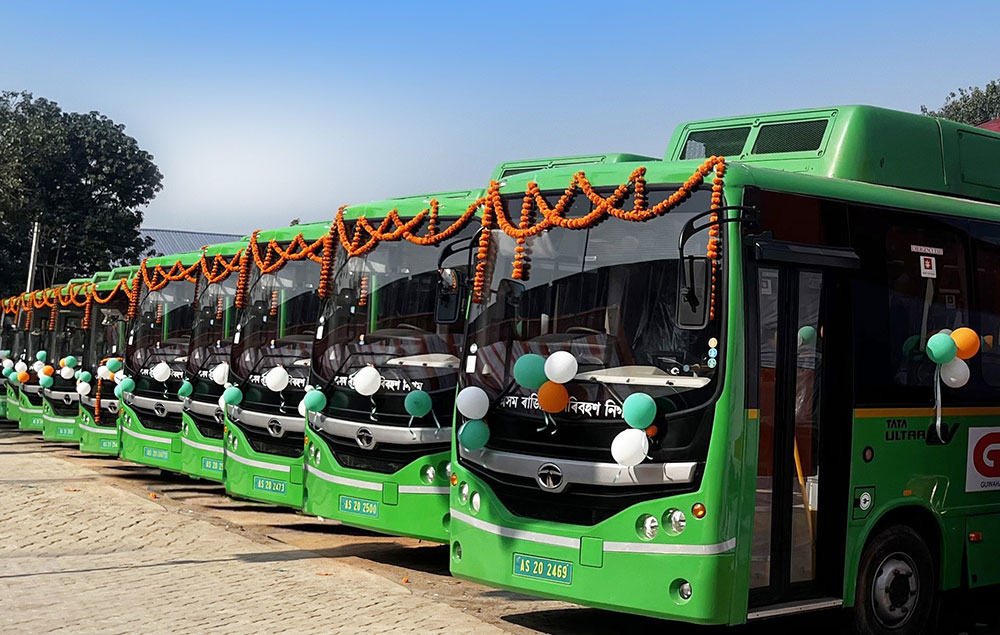
Minister declares no future for petrol and diesel vehicles, signals 1.5 lakh electric bus demand in three years against 70,000 annual capacity
Nitin Gadkari told bus makers at the Busworld India Conclave 2026 that petrol and diesel vehicles have no future. He urged a shift to electric, hydrogen, biofuels, CNG and LNG powertrains. The statement puts EV and bus manufacturers under immediate pressure to expand output and meet stricter safety norms.
Policy Signal Reshapes Industry Priorities
Gadkari highlighted India’s dependence on fossil fuel imports and the need to cut pollution. He pointed to hydrogen bus and truck pilots already running on 10 routes. Manufacturers must move from cost-centric to quality-centric production with better safety, comfort and reliability standards. This directly affects public transport expansion plans.
Also Read: India Launches Real-World Trials of Toyota Mirai Hydrogen Car in Groundbreaking Green Move
Electric Bus Demand Surge Tests Capacity Limits
- Projected demand: 1.5 lakh electric buses in the next three years.
- Current annual manufacturing capacity: around 70,000 buses.
- India has only two buses per 1,000 people, well below global averages.
Tata Motors, Ashok Leyland, Mahindra and others now face a clear gap. They must triple output while integrating new platforms for electric and hydrogen models. Previous diesel bus economics relied on lower upfront costs; electric versions shift the equation toward lower per-kilometre running expenses through reduced fuel and maintenance.
Beyond the Spec Sheet
This clean mobility directive changes the cost of ownership for fleet operators. Electric buses deliver lower operating costs than diesel equivalents in city routes, which encourages higher utilisation rates and denser bus networks. In practice, the real constraints will not be vehicle specs but the speed of charging infrastructure rollout and depot upgrades in Indian cities. Operators who secure early access to reliable power and service networks gain an advantage. Slower adopters risk losing tenders and market share as state transport undertakings accelerate fleet replacement. Urban congestion eases only when bus services become frequent and dependable enough to pull riders from two-wheelers and cars.
The push also accelerates localisation in batteries and components to protect against global supply risks. Bus makers that invest now in scalable electric platforms position themselves for both domestic tenders and potential exports. Those who delay face margin pressure from tighter safety rules and quality demands.


