
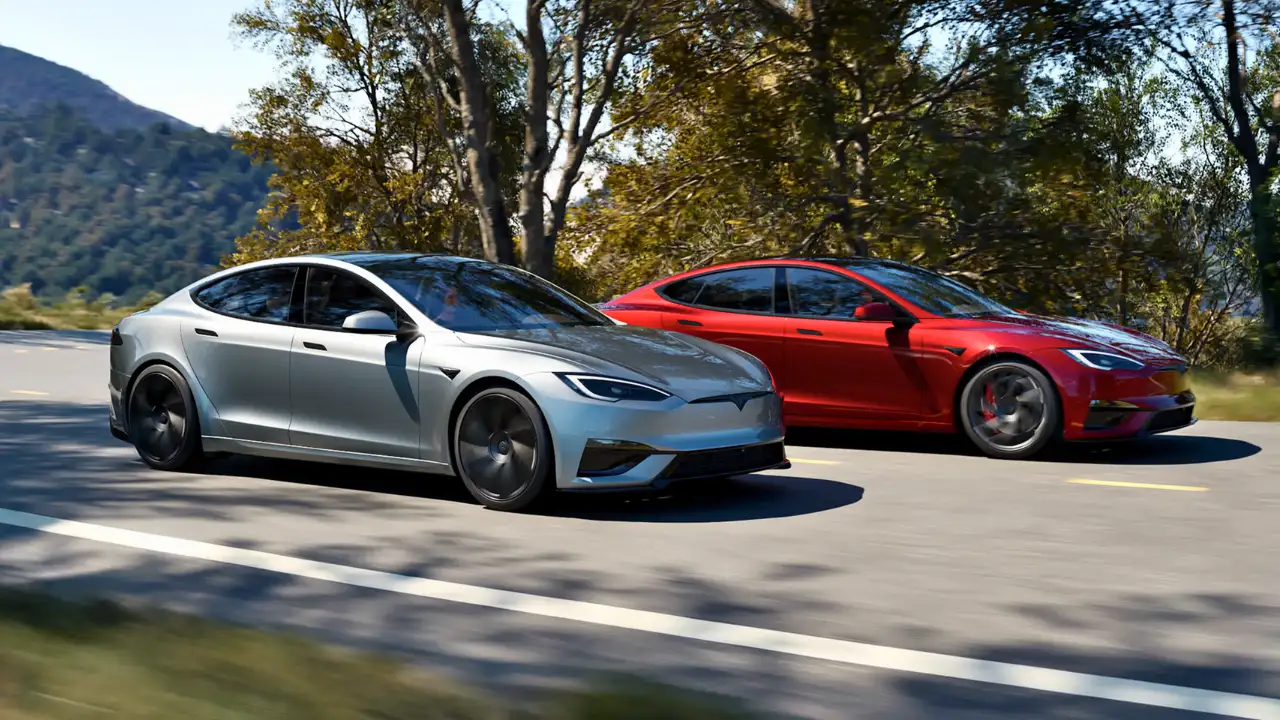
Custom orders for the flagship models have stopped, with only limited inventory left. The move clears factory space for the autonomous Cybercab robotaxi
Tesla has ended custom orders for the Model S and Model X. Only a limited amount of inventory remains available for purchase. The company sent emails to customers confirming the change.
This development matters because it marks the end of Tesla’s longest-running flagship models. Production capacity at the Fremont factory now shifts toward new priorities in autonomous systems.
Factory Reallocation for Future Output
The end of Model S and Model X production frees manufacturing lines. Tesla plans to use the space for Optimus robot assembly and support Cybercab output. Cybercab production has already begun at the Austin facility.
Also Read: Tesla Ends Model S and Model X Production to Shift Focus to Autonomy and Robotics
The Cybercab is a two-seater autonomous vehicle without a steering wheel or pedals. It forms part of Tesla’s strategy for robotaxi services.
Shift in Product Strategy
Tesla moves away from low-volume luxury sedans and SUVs. The Model S and Model X represented early success in premium electric vehicles. Their discontinuation aligns resources with higher-volume autonomous projects.
The Cybercab targets ride-hailing operations. It differs from personal ownership models in design and use case.
Beyond the Spec Sheet
The Cybercab changes daily movement by enabling driverless rides in urban areas. People gain access to on-demand transport without owning a vehicle. This reduces parking needs and alters commuting behaviour in cities.
For goods movement, autonomous fleets lower driver costs and improve reliability on fixed routes. Infrastructure sees higher utilisation of charging points through shared vehicles. Overall, the transition supports scaled electric mobility with fewer personal cars on roads.


