Yamaha enters the Indian electric two-wheeler market with the EC-06 scooter, targeting urban commuters
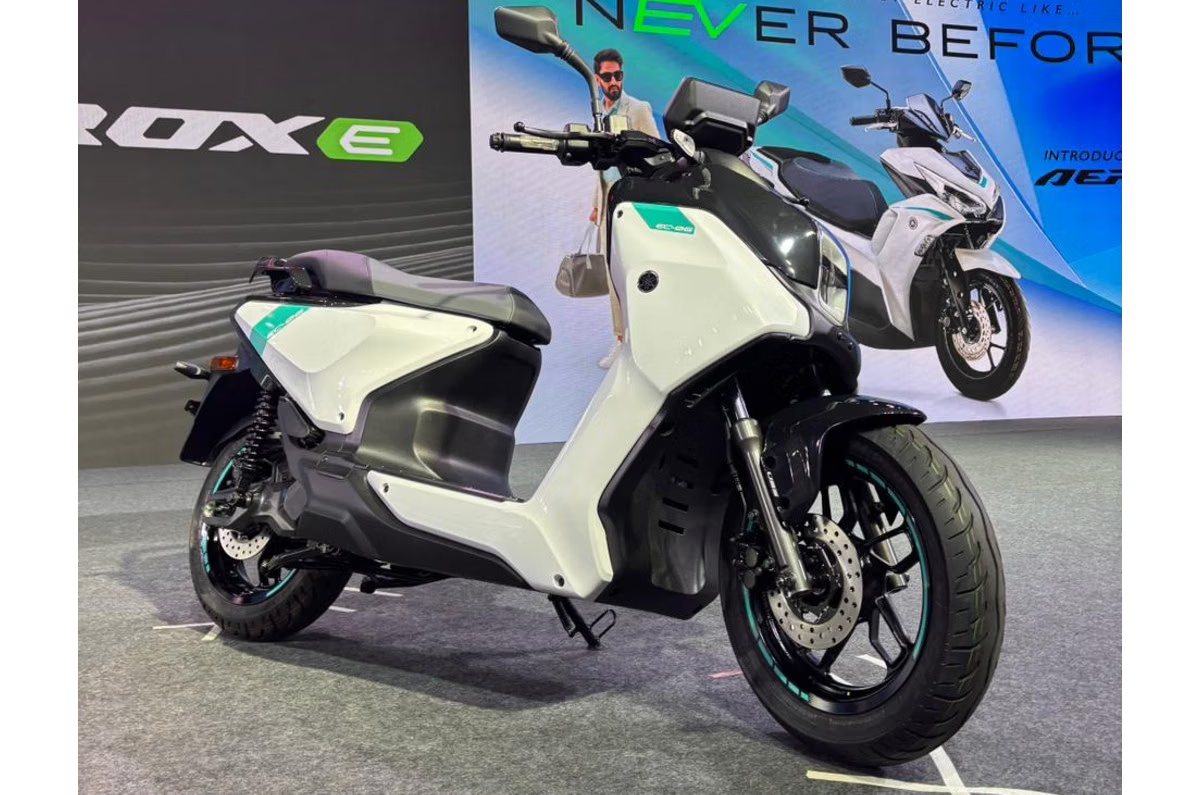
Yamaha Motor India has launched its first electric scooter, the Yamaha EC-06, in the domestic market. The model marks the company’s official entry into India’s electric two-wheeler segment.
This launch matters because it brings a global Japanese brand into a category dominated by local and Chinese-origin players. The EC-06 arrives at a time when electric scooter sales continue to grow in urban areas.
Platform and Positioning
The Yamaha EC-06 is built on a purpose-designed electric platform. It uses a removable battery system and targets short-to-medium urban commutes. Yamaha positions the scooter for daily city use rather than high-performance riding.
Also Read: Yamaha YZF-R2 Trademarked: New 200cc Supersport Coming Soon?
Design and Practical Features
The Yamaha EC-06 features a step-through body style familiar to Indian scooter users. It includes LED lighting, a digital instrument cluster, and keyless operation. Storage space under the seat remains adequate for daily needs such as helmets and small bags.
The scooter offers a claimed range suitable for typical city travel patterns. Top speed stays moderate, which aligns with traffic conditions in most Indian cities. Braking combines a disc at the front and a drum at the rear, with a combined braking system.
Market and Infrastructure Context
The arrival of the Yamaha EC-06 adds another recognised brand to India’s electric scooter lineup. It joins a market where price, range, reliability, and service network influence buyer decisions.
Home charging remains the primary method for most owners. Public charging stations are increasing in metros, but coverage gaps still exist outside major cities. The removable battery option in the Yamaha EC-06 allows users to charge indoors without a dedicated parking infrastructure.
Beyond the Spec Sheet
Daily commuters gain a quieter ride through congested city roads with the EC-06. Morning and evening travel becomes less tiring due to reduced vibration and engine noise.
Women riders and older users find the low seat height and light weight make handling easier. Access to nearby markets, schools, and offices improves without dependence on fuel availability during peak hours.
Running cost per kilometre drops noticeably compared to petrol scooters for riders covering 30–50 km daily. Reliability improves in stop-and-go traffic because there is no clutch or gear shifting required.
Behaviour changes slowly as families consider electric options for the second vehicle. The Yamaha EC-06 supports short outstation trips within range limits when charging points are available along the route.