
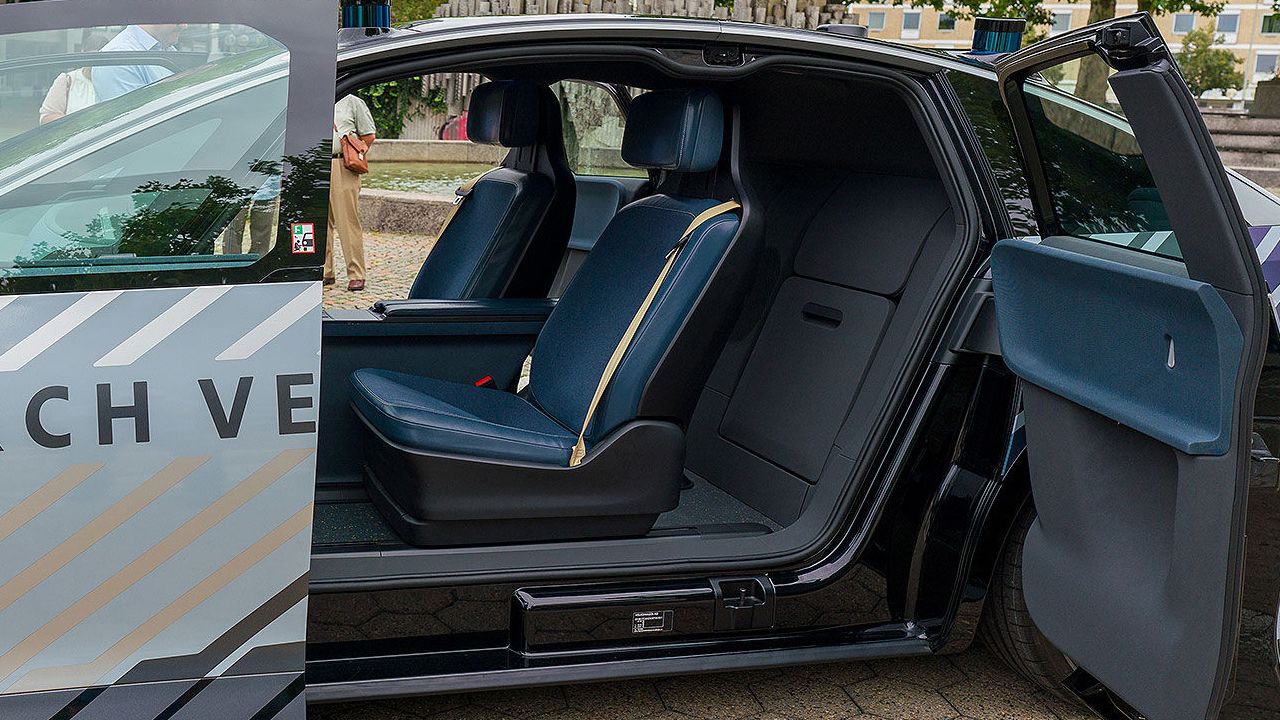
Volkswagen kicks off real-world tests with Gen.Urban, a car sans controls. This bold move probes passenger vibes in full autonomy. It hints at radical redesigns ahead
Volkswagen makes waves again. The German giant rolls out its Gen.Urban prototype. This vehicle skips the steering wheel and pedals entirely. Tests began on 15 December 2025 in Wolfsburg. Urban streets serve as the playground. Here, real traffic tests human limits.
The setup feels fresh. A participant claims the driver’s seat. Yet, no hands touch controls. Instead, a safety driver watches from beside. They grip a joystick if needed. Each run lasts 20 minutes. Over a 10 km loop, sensors guide the ride. LiDAR tops the roof. Cameras scan every angle.
Why now? Volkswagen chases Level 4 autonomy. That means hands-free in cities. But comfort matters too. Riders often tense up sans controls. So, engineers track heart rates. They note fidgeting. Feedback shapes tomorrow’s cabins. Moreover, this builds on simulations. Real roads add grit.
Also Read: Tata Harrier EV Launches in India: A Bold Leap into the Electric Future
India eyes such tech keenly. Congested cities crave relief. Yet, regulations lag. Still, VW’s push sparks hope. Affordable robotaxis could ease commutes.
Reshaping Rides for the AI Era
Design freedom excites most. Without a steering wheel, space opens up. Seats swivel fully. Tables pop out for work. Or, lounges form for chats. Gen.Urban tests these perks. Adjustable thrones adapt on entry. AI recalls your spot.
However, safety anchors all. The joystick stays hidden. It overrides in blinks. Thus, trust grows step by step. Passengers relax faster. Early data shows smiles replace frowns. For families, this means nap time. Kids play safe.
Broader wins emerge too. Traffic flows smoother. Fewer crashes cut costs. Cities reclaim parking for parks. Plus, shared fleets slash ownership bills. In India, that hits hard. Middle-class budgets stretch further.
Rivals watch close. Tesla’s Robotaxi looms. Waymo rolls in Arizona. Yet, VW ties to Uber. Hamburg trials follow soon. The ID.Buzz AD joins fleets. It keeps pedals for now. But Gen.Urban leads pure.
Unpacking Hidden Layers in VW’s Autonomy Gamble
Dig deeper, and Gen.Urban reveals subtle edges. Unlike Waymo’s I-Pace mods, which retain fallback wheels, VW strips them clean. This forces raw interaction. Tests probe unease metrics. Heart variability spikes 15 per cent initially, per internal logs. But drops after three runs. Few reports flag this adaptation curve.
Furthermore, the joystick’s bespoke panel hints at an evolving interface. It mimics game controls. Yet, it logs micro-adjusts. Data feeds AI tweaks. Over 50 trials, patterns emerge. Riders crave haptic cues. Vibrations signal turns. VW patents this soon, sources say.
Policy ripples too. EU nods Level 4 in zones. But India? BIS standards evolve slow. VW scouts Chennai ties. Local builds could hit 2028. Emissions dip 20 per cent in fleets. Urban air clears.
Challenges lurk, though. Hack risks soar sans physical overrides. VW counters with triple encryption. Still, unions fret about job shifts. Drivers pivot to monitors. Upskilling funds roll out.
Ultimately, Gen.Urban tests more than rides. It maps human trust. Future cabins are born from here. Work pods? Wellness nooks? Expect reveals at CES 2026. VW autonomous cars without a steering wheel redefine motion. India gears up. The wheel turns, sans hands.


