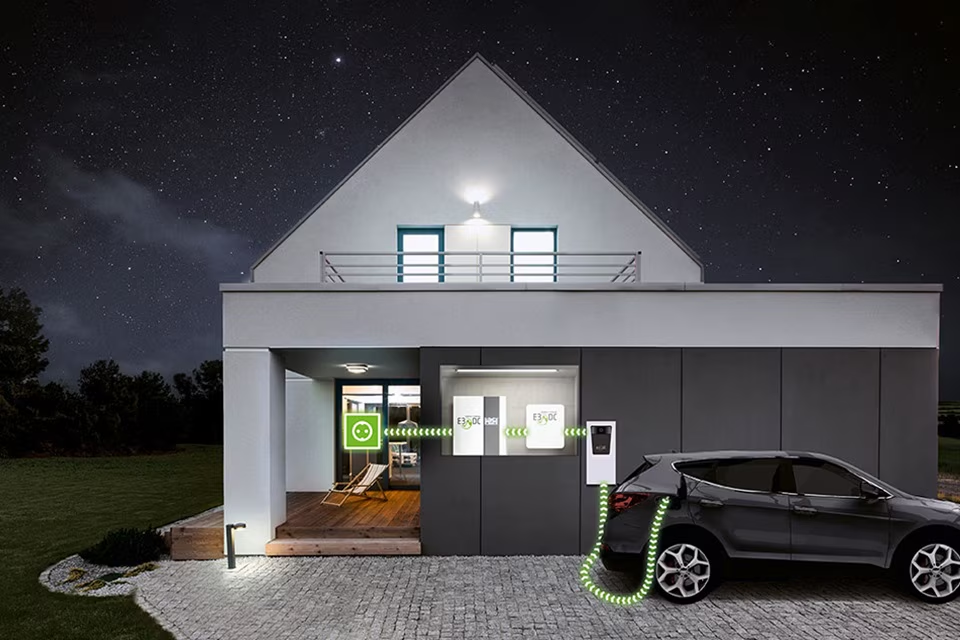
A groundbreaking US research reveals how vehicle-to-home charging optimises electricity use, saving households money while slashing greenhouse gases
Electric vehicles continue to gain popularity. However, high costs often deter buyers. Now, a recent study in Nature Energy highlights vehicle-to-home charging as a powerful solution.
Researchers from the University of Michigan and Ford modelled scenarios across the US. They found that this charging allows EV batteries to store cheap, clean electricity. Then, it powers homes during peak times.
This approach shifts energy use smartly. As a result, owners enjoy major benefits. For instance, vehicle-to-home charging reduces lifetime charging costs by 40-90%. Many households save $2,400 to $5,600 over 15 years.
Also Read: India Launches Real-World Trials of Toyota Mirai Hydrogen Car in Groundbreaking Green Move
Moreover, it lowers electricity bills overall. In some regions, savings exceed charging expenses.
Massive Reductions in Greenhouse Gases
Vehicle-to-home charging excels in environmental impact too. The study shows it cuts lifecycle emissions from household electricity by 70-250%.
On average, this means 24-57 tons less CO2 per vehicle. In many areas, reductions offset charging emissions completely.
Why does this happen? Charging avoids high-emission grid hours. Instead, it uses renewable-heavy periods.
Additionally, as grids decarbonise further, benefits grow. Therefore, it amplifies EV advantages beyond transport.
Bright Future for Widespread Adoption
Experts predict rapid growth. More bidirectional chargers and compatible EVs emerge; consequently, barriers to EV ownership fall.
Households gain resilience during outages. Grids stabilise with balanced loads. And, cleaner energy integration accelerates.
This charging transforms EVs into home assets. It delivers cost savings and emission cuts today. Tomorrow, it supports sustainable living widely.
This technology aligns with policy pushes for electrification. Thus, expect stronger EV uptake soon.