
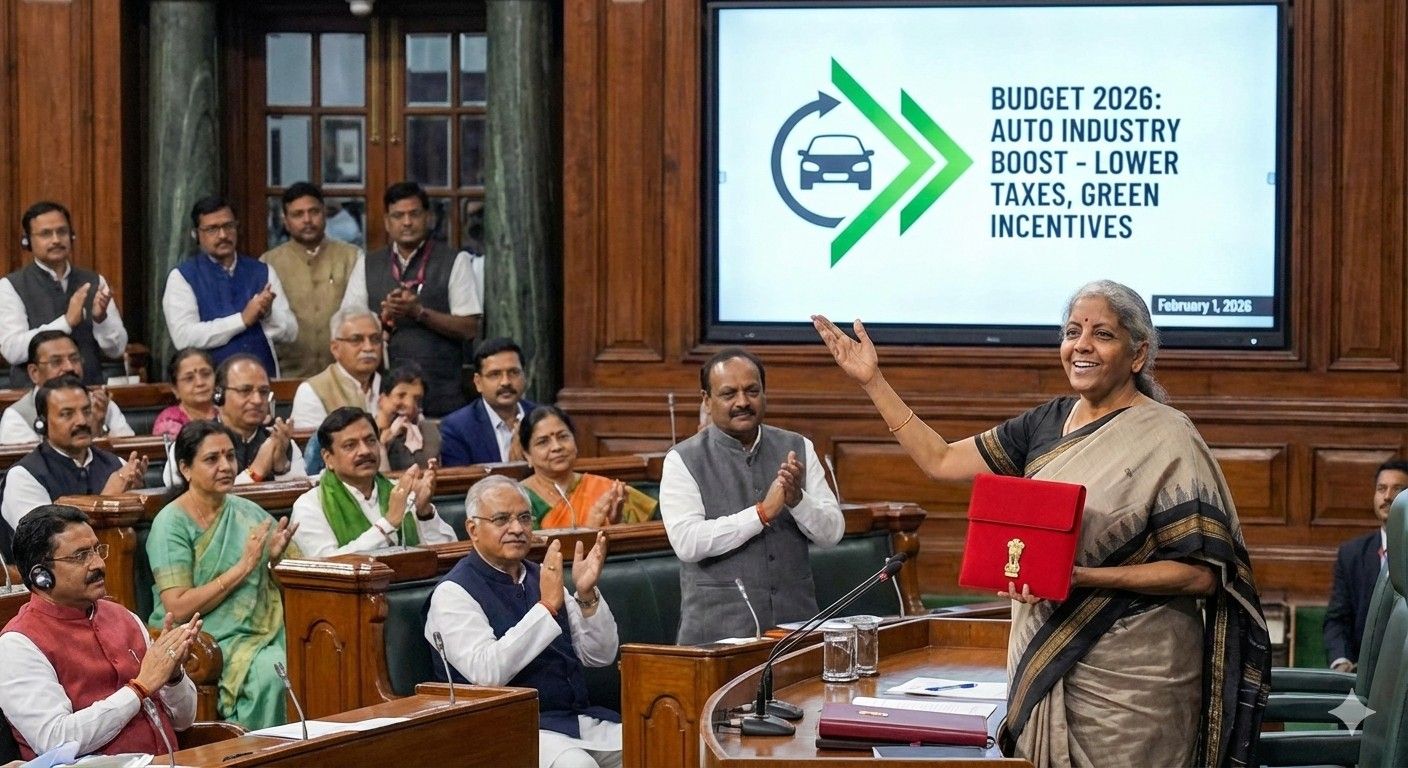
Higher capex, battery manufacturing relief, and supply chain measures aid mobility sector stability and clean transition
The Union Budget 2026-27, presented on 1 February 2026, sets capital expenditure at Rs 12.2 lakh crore for the coming fiscal year. This marks an increase from the previous year and supports infrastructure projects across the country.
The move matters now because automobile demand is closely tied to road networks, logistics efficiency, and public transport systems. Higher spending under the Union Budget 2026-27 strengthens these areas and influences vehicle usage patterns.
Infrastructure Push Drives Vehicle Demand
Increased capital outlay targets highways, freight corridors, and urban connectivity. Better roads reduce travel time and vehicle operating costs. Commercial vehicle segments benefit from steady demand in logistics and construction.
The budget also allocates funds for e-bus procurement in select regions. This expands public electric mobility options in cities and tourist areas.
Also Read: Tata Avinya EV Flagship Range Set for Late 2026 India Launch
EV Supply Chain and Manufacturing Support
Union Budget 2026-27 continues the exemption of Basic Customs Duty on capital goods for lithium-ion battery manufacturing. It extends concessional duty benefits for lithium-ion cells and parts in electric and hybrid vehicles until March 2028. Additional capital goods receive exemptions to aid battery production.
Duty relief applies to critical minerals such as cobalt powder and lithium-ion battery scrap. These steps build domestic supply chains and reduce reliance on imports. Rare-earth corridors in select states promote mining and processing of magnets used in EV motors.
The budget increases the allocation for the PLI scheme for automobiles and auto components. This encourages localisation of high-value parts and supports manufacturing scale.
Beyond the Spec Sheet
Higher infrastructure spending shortens inter-city travel times and improves the reliability of goods movement across states.
Consumers experience lower running costs on better roads and gain wider access to electric buses in public transport networks.
A faster rollout of charging infrastructure, supported by ecosystem measures, reduces range concerns for private EV owners and enables longer daily commutes.
Fleet operators find stable input costs from stronger battery supply chains, which support predictable pricing for goods transport.
Urban residents shift behaviour toward shared electric mobility as dedicated e-bus fleets grow in key corridors.


