
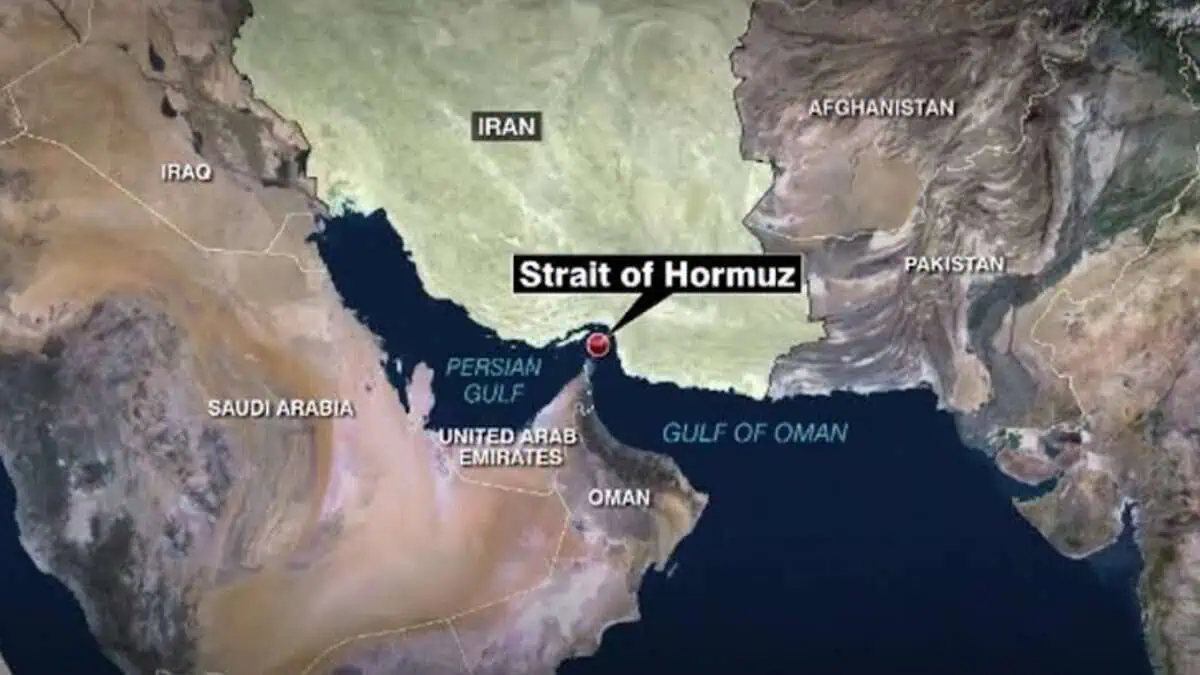
Iran’s warnings amid domestic unrest and US pressure raise risks to key oil transit route carrying one-fifth of world supply
Iran has issued threats to disrupt the Strait of Hormuz as domestic protests intensify and US warnings escalate. Markets react with caution due to the route’s role in global energy supply.
This development matters now because the Strait of Hormuz handles about 20 million barrels per day of oil, roughly one-fifth of global consumption. Any sustained disruption raises supply risks and pushes prices upward.
Strait of Hormuz Role in Global Energy Flows
The Strait of Hormuz connects the Persian Gulf to the open sea. It serves as the only maritime exit for oil and LNG from major producers like Saudi Arabia, Iraq, UAE, Kuwait, and Qatar. Around 13 million barrels per day of crude transited the Strait of Hormuz in 2025.
This chokepoint also carries significant LNG volumes, mainly from Qatar. Disruptions here affect Asian markets most, including India and China, which rely heavily on these imports.
Also Read: Chery Readies Exeed EVs for Solid-State Battery Trials in 2026
Geopolitical Pressures on the Strait of Hormuz
Iran controls the northern shore of the Strait. It has historically used threats to the passage as leverage during tensions. Current unrest in Iran, linked to protests and regime responses, combines with external pressures from US sanctions and statements.
Experts note that full closure remains unlikely due to US naval presence and Iran’s economic dependence on oil exports. Temporary actions, such as mining, harassment, or missile threats, could still raise insurance costs and deter shipping. Markets price in this uncertainty, even with global oil in surplus.
Beyond the Spec Sheet
Higher oil prices from Strait of Hormuz risks increase fuel costs for daily commuting and logistics in import-dependent countries. Goods movement slows as shipping rates climb and routes face delays.
Fleet operators face reliability challenges with potential rerouting or insurance hikes, affecting supply chains. Transport behaviour shifts toward conservation measures when costs rise sharply. Access to affordable mobility declines for households and businesses reliant on stable energy prices.



One Comment