
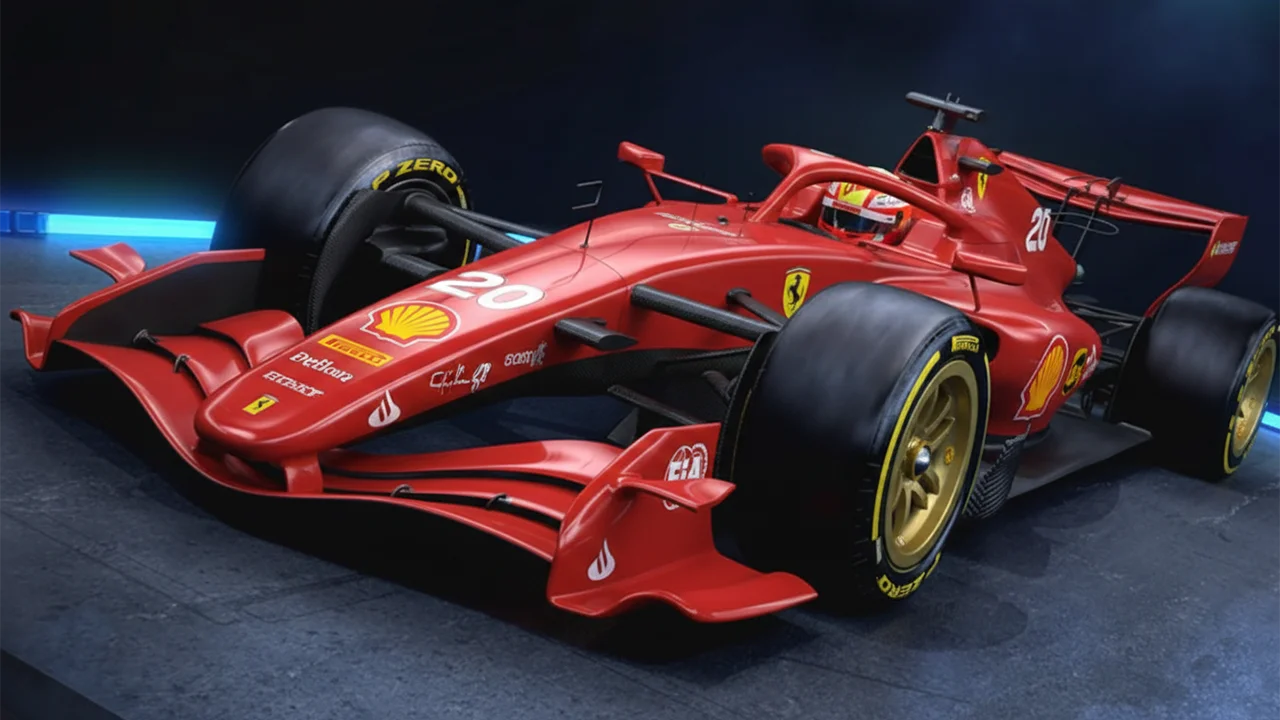
The iconic Italian team confirms SF-26 as the designation for its next-generation Formula 1 car
Ferrari has revealed the official name of its 2026 Formula 1 car as SF-26. The announcement comes just days before the full car launch on January 23 in Maranello. This naming follows tradition, where SF stands for Scuderia Ferrari.
The reveal matters now because 2026 brings sweeping F1 regulation changes. These include hybrid power units with 50 per cent sustainable fuel and active aerodynamics. For Ferrari, the SF-26 represents a fresh start under team principal Fred Vasseur. It also integrates Lewis Hamilton’s arrival alongside Charles Leclerc. Such developments shape team strategies early in the cycle.
Naming Legacy in Ferrari’s F1 Lineage
Ferrari maintains consistency with its SF prefix for single-seaters since 2022. Before that, models carried SF numbers tied to engine codes. The Ferrari SF-26 continues this evolution. It drops internal project labels like 678 used during design. Engineers finalised the name to align with public branding. This practice aids fan recognition and sponsor integration. Moreover, it simplifies media coverage across global circuits.
The shift underscores Ferrari’s focus on heritage amid change. Teams often lock names months ahead. For instance, Mercedes revealed its 2026 contender as W16 last year. Ferrari’s timely disclosure builds anticipation. It also allows suppliers to synchronise marketing efforts. In turn, this strengthens commercial partnerships vital for F1’s financial model.
Also Read: Ferrari Amalfi Debuts as Roma’s Stylish Successor
Adapting to 2026 Powertrain Overhaul
The Ferrari SF-26 must comply with FIA’s redesigned power units. These feature a 400kW electric motor and reduced fuel flow. Battery capacity rises to support longer stints. Ferrari’s in-house engine division at Maranello leads this transition. They collaborate with partners like Bosch for electronics. Such integrations ensure the Ferrari SF-26 delivers reliable performance under new limits.
Infrastructure plays a key role too. Circuits upgrade charging stations for hybrid testing. Teams invest in simulators to model the Ferrari SF-26’s dynamics. Data from these tools refines chassis stiffness and weight distribution. Consequently, the car promises better energy recovery during braking. This setup lowers operational costs over race weekends. Reliability gains from modular components further aid pit strategies.
Beyond the Spec Sheet
The Ferrari SF-26 enhances driver access to sustainable power in high-stakes races. Pilots like Hamilton gain precise control over energy deployment for overtakes. Teams realise cost savings through efficient fuels that cut logistics expenses. Reliability in hybrid systems reduces mid-race failures and boosts completion rates. Behaviour among engineers shifts towards data-driven tweaks for consistent lap times. Fleet operators in motorsport logistics benefit from lighter materials that speed up transport between venues.


