
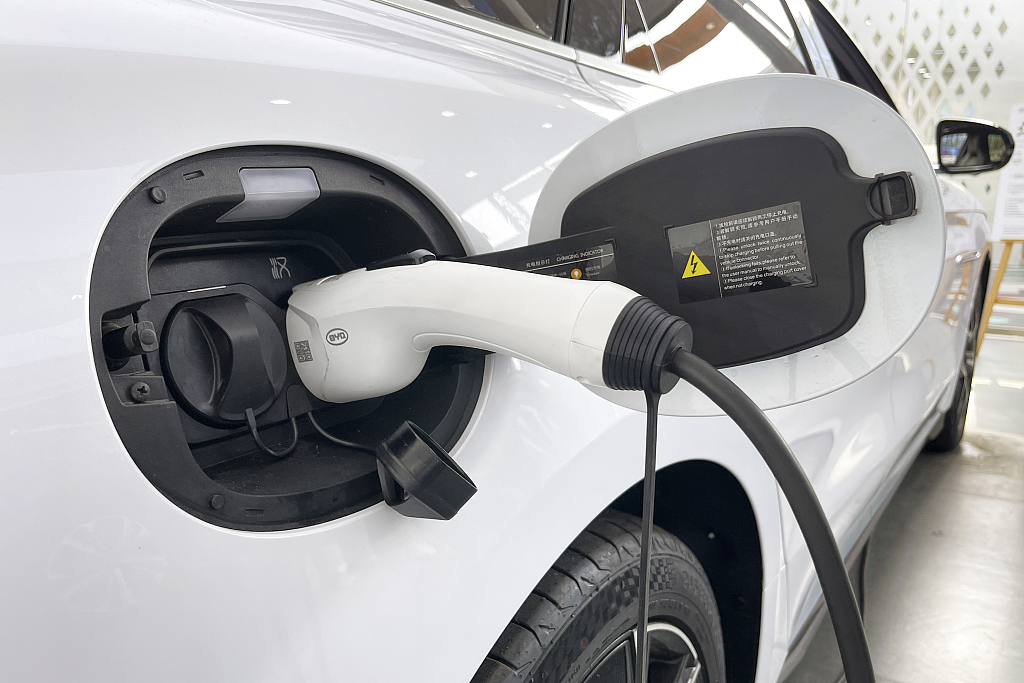
The new service lets BYD drivers share private chargers, easing access gaps in dense urban markets
BYD has launched a home charging station sharing service through its mobile app, allowing vehicle owners to make their private chargers available to other BYD users. The feature enables hosts to list availability, set usage conditions, and manage access digitally, while visiting drivers can locate and book nearby chargers.
This move matters because charging access, not vehicle capability, remains one of the most persistent barriers to electric vehicle adoption. Public charging networks continue to lag demand in many cities, especially in residential clusters where curbside infrastructure is limited. BYD home charging station sharing introduces a decentralised layer of charging access that works around slow infrastructure rollout.
Rather than waiting for municipalities or utilities to expand networks, the model taps into chargers that already exist but remain underutilised for most of the day. For EV owners without dedicated parking or private chargers, this directly expands practical charging options.
Context and system relevance across mobility
The BYD home charging station sharing service sits at the intersection of private ownership and public utility. Most home chargers are installed for overnight use and remain idle during working hours. By opening them up through a managed platform, BYD effectively converts private assets into a shared mobility resource.
For urban mobility systems, this changes how charging demand distributes across time and location. Instead of concentrating demand at public fast-charging hubs, some load shifts to residential neighbourhoods. This can reduce peak pressure on public chargers and improve overall system reliability, provided local electricity networks are managed carefully.
From a grid perspective, the service encourages more predictable, scheduled charging compared to opportunistic public charging. App-based bookings allow users to plan charging windows, which can later integrate with time-of-day tariffs or load-balancing tools. Over time, such models can support more stable electricity demand patterns.
Implications for users and cost dynamics
For charger hosts, BYD home charging station sharing creates a way to offset installation and electricity costs. While pricing structures vary by market, even modest fees can improve the economics of owning a home charger. This may encourage more buyers to install chargers upfront, knowing there is potential for shared use.
For visiting drivers, the service offers charging access closer to destinations, often at lower cost than commercial public chargers. This is particularly relevant in apartment-dense areas where public chargers are scarce or consistently occupied.
Importantly, the model does not replace public charging. It complements it by filling gaps in residential and semi-private spaces where infrastructure deployment is slow or commercially unattractive.
Platform control and operational safeguards
Unlike informal charger sharing, BYD home charging station sharing operates within a controlled ecosystem. Access is limited to verified BYD users, and charger owners retain control over availability and usage rules. This reduces safety and reliability concerns that often limit peer-to-peer infrastructure sharing.
The app-based approach also enables data capture on usage patterns, dwell times, and location-based demand. For BYD, this data can inform future vehicle features, charger hardware design, and partnerships with utilities or housing developers.
Why this matters beyond BYD
While the service is currently limited to BYD owners, the concept signals a broader shift in how charging infrastructure may scale. As EV volumes grow faster than public infrastructure, shared private assets become a practical stopgap.
For cities and policymakers, models like BYD home charging station sharing demonstrate how digital platforms can extend infrastructure capacity without large physical build-outs. For automakers, it shows that vehicle ecosystems increasingly extend into energy and access management.
Also Read: Xiaomi EVs Set for Global Expansion, But only by 2027!
Beyond the Spec Sheet
In practice, BYD home charging station sharing affects how people plan movement rather than how vehicles perform. It reduces detours to distant charging hubs, shortens waiting times, and makes residential charging more accessible for drivers without private parking. Over time, this can lower daily operating costs, increase confidence in EV ownership, and shift charging behaviour from reactive to planned. For dense cities, the outcome is not faster cars, but more reliable movement supported by shared access to existing infrastructure.


