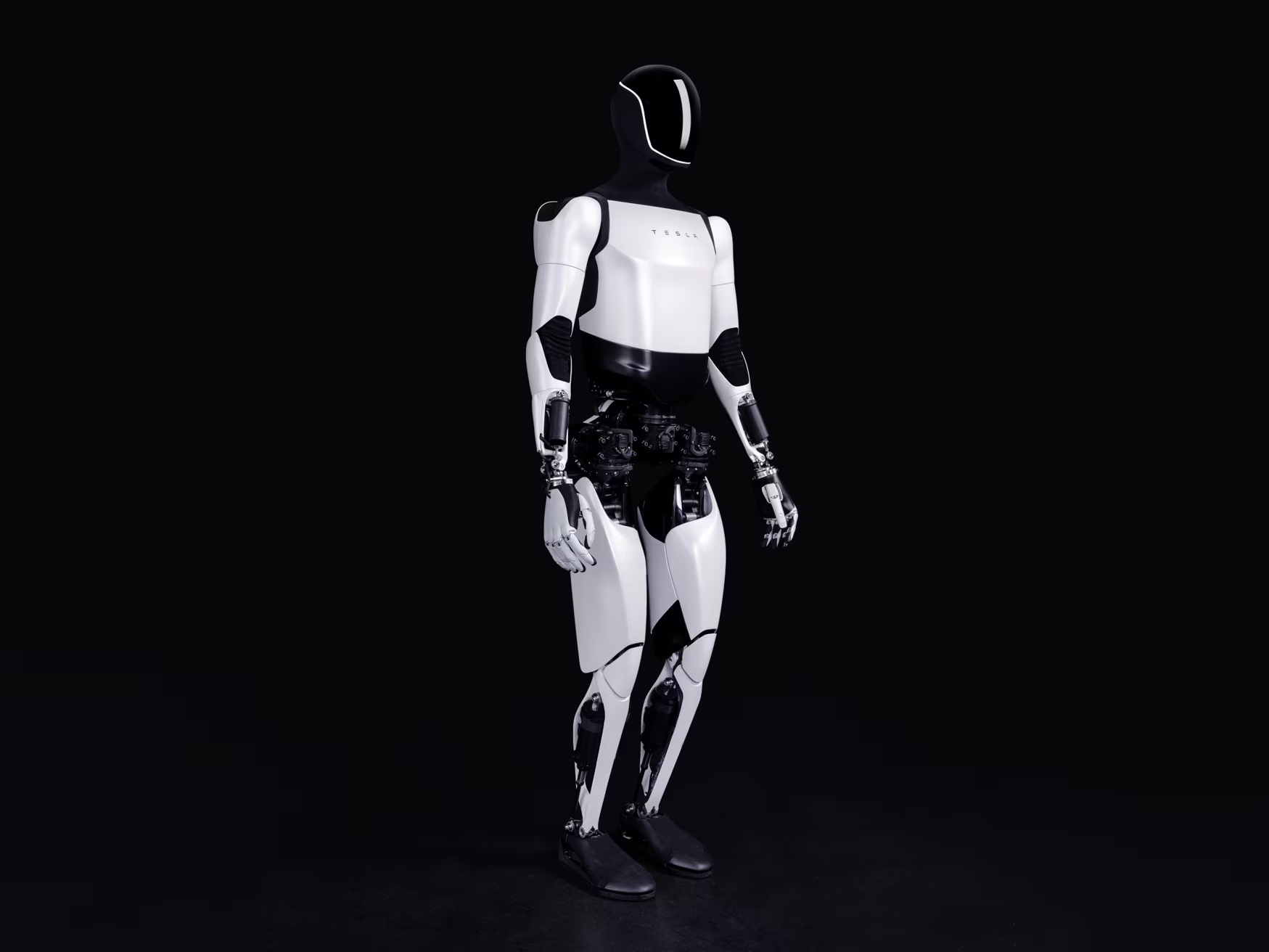
Facility bridges prototype-to-production gap with 5,000-unit annual capacity for embodied humanoid robots
Beijing launched its first pilot platform for manufacturing and validating humanoid robots. The Beijing Innovation Centre of Humanoid Robotics opened the facility in late January 2026 in Beijing E-Town.
This step matters because it addresses the common industry challenge of moving from laboratory prototypes to scalable output. The platform supports standardised processes and testing, which prepares humanoid robot designs for larger production volumes.
Platform Design and Capacity
The facility covers multiple floors and includes 500 sets of production and testing equipment. It offers an annual pilot production capacity of up to 5,000 embodied humanoid robots.
Key features include small-batch trial lines, full assembly demonstration lines, and component-specific production setups. The platform also provides shared access for companies, universities, and research institutes.
Also Read: Tesla Humanoid Robots to Transform Automotive Manufacturing by 2027
Role in Industry Transition
The humanoid robot sector faces bottlenecks in manufacturing consistency and reliability. This platform creates a standardised hub that validates processes across prototyping, system integration, and multi-stage testing.
It supports the full chain from individual components to complete robot assembly. Such infrastructure helps reduce risks before full-scale commercial rollout. The launch aligns with national priorities to accelerate the development of embodied intelligence applications.
Beyond the Spec Sheet
Humanoid robot deployment changes the movement of goods in warehouses and factories through precise, repetitive handling tasks. Workers gain access to safer environments as robots take over heavy or hazardous lifting.
Operational costs drop over time, driven by consistent performance and lower downtime compared to human labour in select roles. Reliability improves in structured settings where humanoid robot actions follow verified sequences.
Behaviour shifts occur in the logistics and service sectors as teams adapt workflows to incorporate robot assistance. Access to 24-hour operations becomes feasible in controlled indoor spaces. Movement efficiency increases in tight spaces when a humanoid robot’s dexterity matches human-like navigation.