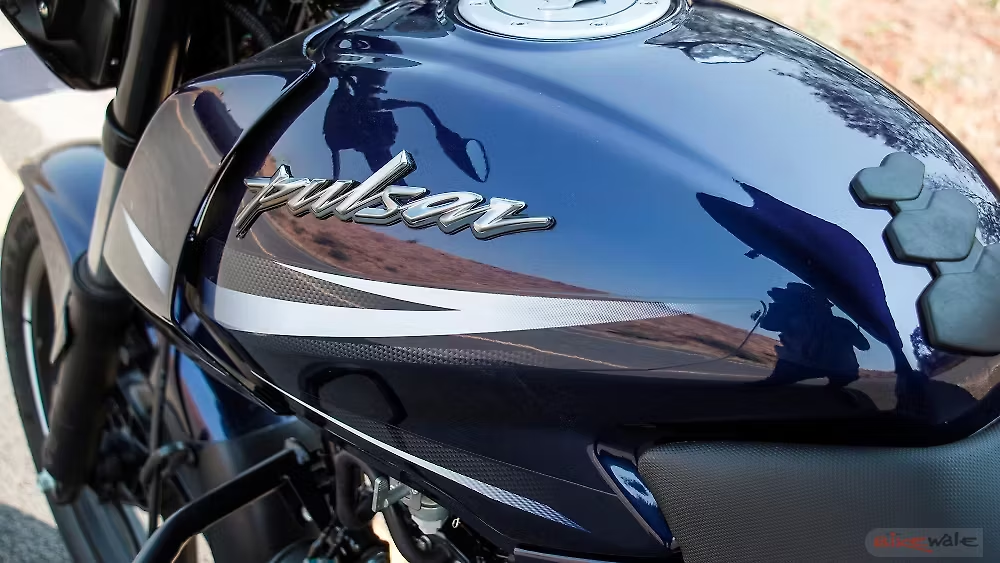
Bajaj Auto plans a major Pulsar lineup expansion with eight fresh models arriving by mid-2026 to strengthen its 150-250 cc segment presence
Bajaj Auto has announced plans to launch eight new Bajaj Pulsar motorcycles by mid-2026. The company intends to refresh and expand its core Pulsar family over the next 18 months.
This move matters because the Pulsar range remains one of India’s highest-selling motorcycle families. Fresh models will help Bajaj defend market share in a segment facing pressure from new entrants and stricter emission norms.
Platform and Segment Strategy
The upcoming Bajaj Pulsar models will span multiple sub-segments within the 150-250 cc category. Bajaj plans to cover commuter, naked street, and semi-faired performance variants. Some models will use updated versions of existing platforms, while others may receive new underpinnings.
Also Read: Bajaj Pulsar 150 price update reflects how commuter motorcycle pricing is being reset in India
The company aims to address changing buyer preferences in urban and semi-urban India. Fuel efficiency, refinement, and modern features now carry more weight alongside performance.
Emission and Technology Upgrades
All eight new Bajaj Pulsar models will comply with the upcoming emission regulations. Bajaj is expected to equip them with fuel-injected engines that meet OBD-2B standards. Several variants may include ride-by-wire throttles and traction control in higher trims.

Digital instrument clusters, LED lighting, and Bluetooth connectivity are likely to appear across more models. These changes align with the gradual shift toward feature-rich motorcycles in the mid-capacity segment.
Engine options will continue to revolve around single-cylinder air- and oil-cooled units. Displacement will stay between 160 cc and 250 cc for most models. Bajaj has not disclosed specific power or torque figures yet.
Beyond the Spec Sheet
New Bajaj Pulsar models will allow daily commuters to cover longer distances with fewer fuel stops. Improved refinement reduces rider fatigue during extended highway rides. Lower ownership costs become possible through better fuel economy and durable components.
Young riders gain more style and feature choices without moving to higher-capacity segments. Delivery personnel benefit from reliable mid-capacity machines suited to city traffic and occasional long runs. Urban households find it easier to own a second vehicle that balances cost, access, and daily usability.
Riding behaviour shifts slightly as modern features encourage smoother throttle control and safer night riding. Commuters in smaller cities experience greater confidence in all-weather usability due to consistent updates across the range.