
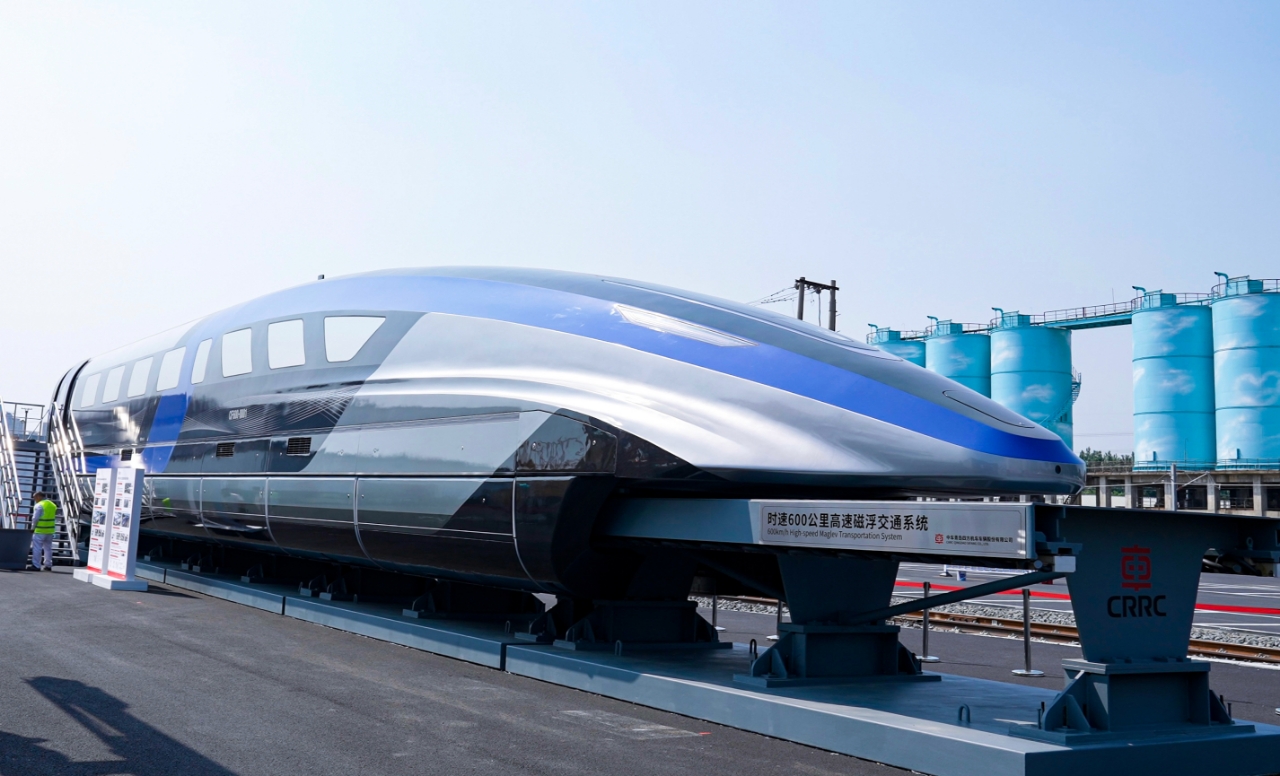
A record-setting maglev acceleration test highlights how rail systems are being redesigned around speed, energy control, and infrastructure integration
China has reported a successful test of a maglev test vehicle that accelerated to 700 kmph in just two seconds. The test did not involve passenger service or a full-length commercial track. It was conducted on a controlled experimental facility designed to study extreme acceleration, stability, and energy transfer.
Within the broader mobility landscape, this matters less as a headline speed record and more as a demonstration of how high-speed rail systems are being engineered differently from conventional rail. Maglev systems remove physical contact between vehicle and track, allowing acceleration and deceleration profiles that wheel-on-rail systems cannot safely support. The test pushes the envelope on how quickly a rail-based vehicle can enter and exit ultra-high-speed regimes. which has implications for route design, station spacing, and power infrastructure.
Why this is happening now
This development aligns with China’s long-term investment in high-speed rail systems as part of national transport and industrial policy. Over the past decade, the focus has shifted from simply expanding network length to improving system performance, energy efficiency, and operational flexibility. Experimental maglev platforms offer a way to test these parameters without disrupting existing passenger services.
Globally, high-speed rail systems are reaching practical limits on conventional steel-wheel tracks, especially above 350 kmph. Incremental gains in speed now require disproportionate investment in maintenance, noise mitigation, and safety systems. Maglev research allows engineers to explore alternative pathways where higher speeds do not automatically translate into higher wear and lower reliability. The timing reflects a broader search for next-generation rail architectures rather than an immediate push for commercial deployment.
Who is affected and how mobility may change
In the near term, the direct impact on passengers is minimal. No commercial routes operate at these speeds, and none have been announced based on this test alone. However, the work influences how future high-speed rail systems may be planned. Faster acceleration means trains could potentially serve more closely spaced stations without losing end-to-end time advantages, altering access patterns for intermediate cities.
From a cost and capacity perspective, the implications are mixed. Maglev infrastructure typically requires higher upfront capital investment and dedicated corridors. At the same time, reduced mechanical wear can improve long-term reliability and lower certain maintenance costs. For freight and time-sensitive logistics, such systems could eventually support high-value, low-volume cargo where speed reliability matters more than raw capacity.
Urban and regional planners are also stakeholders. High-speed rail systems with extreme acceleration profiles place new demands on grid stability, land use planning, and safety zoning. These factors influence where stations can be built and how such lines integrate with metros, buses, and last-mile transport.
Also Read: Global Car Sales Surge 5 Percent in 2025, China Leads the Charge Amidst Mixed Global Trends
Beyond the Spec Sheet
This test really shows a shift in how high-speed rail systems are being conceptualised. Speed is no longer a standalone performance metric. It is becoming one variable within a tightly coupled system that includes power supply, digital control, civil engineering, and passenger flow management.
In practical terms, this could change how corridors are designed. Shorter acceleration zones, different station layouts, and more flexible service patterns become possible when vehicles can reach cruising speed almost instantly. For cities, this means high-speed rail systems may start to behave less like long-distance trains and more like regional mobility backbones that connect multiple urban nodes efficiently.
For operators and regulators, the challenge moves to system governance. Managing energy surges, ensuring safety at extreme speeds, and coordinating with existing transport networks becomes central.


